Tuesday, 4 December 2012

The 3 Types of Foot Strikes: Pronation, Supination, and Neutral

Did you know that the way you walk may affect the overall health of your feet? Everybody walks a little different, and the way your foot lands on the ground, or “strikes” the ground when you step, can really help or hinder your ability to walk or run long distances. Knowing your foot strike will help you get the right shoes and equipment to ensure you have happy feet.

Type 1: Pronation


The first type of foot strike is called Pronation. If you have ever been caught “flat-footed,” then you have been caught pronating. Pronation occurs when your arch flattens on your strike, causing your foot and ankle to roll inward. This causes stress on the ankles and can create shin splints and cause other lower leg issues. A quick way to tell if you over pronate is by checking how the soles of your shoes wear out. If they are worn out on the inside of the sole, then it is likely that you are a pronator.

Type 2: Supination


The second type of strike is called Supination. If you guessed it is the opposite of pronation, than you’re absolutely right. Supination is when, instead of being flat-footed, you have high arches. When your foot strikes the ground, much of the cushion of the foot is lost. The foot doesn’t flatten at all on impact, and there is little shock absorption. The affect is an outward roll and can cause plantar fasciitis, ankle sprains, and other foot and leg injuries.


Type 3: Neutral


A Neutral foot strike occurs when you neither over pronate nor supinate. It is when the foot strikes in an effective, efficient manner and typically leads to the least amount of injuries while running or walking.

Which Type Are You?


So which type are you? A popular (and easy) way to test which strike you have is the “Wet Test.” You can do this at home, and it only takes some water, paper, and about five minutes of your time.

First, lay out the paper; a dark color often works best. Try a brown paper bag from your local grocery store. Get the bottom of your foot wet by stepping in a bowl or pan of water or your bathtub. Then step onto the paper and step off. Examine your wet footprint. Based on the amount of foot print you see, you will be able to tell your strike. If much of the sole of your foot is visible – almost like it was flat – then you are a pronator. If the opposite holds true, and just the outside edge of your sole appears, then you are likely a supinator. If it looks to be well balanced, you probably have an efficient neutral strike.

You can always trust the professionals. Any running store employee worth their paycheck should be able to help you determine how your foot lands. Also, a podiatrist or other foot care professional can help make the determination. By knowing which type of foot you have, you can ensure that you have the proper shoes and orthotics to avoid pain and discomfort. Your feet with be a lot happier.

Monday, 3 December 2012

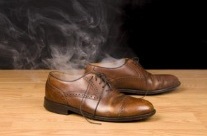
The Battle Against Stinky Feet

The Battle Against Stinky Feet
Chances are somebody you know or love suffers from stinky feet. You can hardly blame them. Did you know that between your two feet there are nearly half a million sweat glands? But your feet aren’t alone.

For example, the palms of your hands have a comparable number of tiny, sweaty pores. So why don’t our hands get that same yucky odor? Three words: Shoes and socks. Imagine those ½ a million pores on our feet, wrapped in cotton and leather, all tied up nice and tight. Naturally, with those soggy socks and sweaty toes comes inevitable odor. You might be interested to know, however, that the sweat from your feet is actually odorless.

Bacteria are really what cause the smells. Bacteria will thrive in between your toes and around the soles of your feet and are held captive by your shoes and socks. The smell starts to form when the bacteria digests the sweat. Some describe it as a sour smell or like malt vinegar or limburger cheese. Others, like my wife, describe it simply as “gross” and “unacceptable.”

So how do we battle the foot odor? Either get rid of the sweat, or get rid of the bacteria.

Here are some effective ways to cut down on foot sweat:
  • In-soles: There are a number of sweat-reducing insoles available to purchase. These are often times charcoal based, and they suck the sweat right up.
  • Ventilated Shoes: Wearing sandals or other open toed shoes open up air flow and reduce sweat.
  • Sweat-Absorbing Socks: By wearing new, clean cotton socks, you can actually reduce sweat as the cotton acts as an absorbent.
  • Air Out Your Shoes: Take some time each day to remove your shoes and socks to let your feet dry out and enjoy some air.
  • Antiperspirants: Yep, you can even apply an antiperspirant to your feet.
Here are some proven methods to reduce bacteria on your feet:
  • Use antibacterial soap on your feet to keep them clean.
  • Be sure to frequently rotate your socks and make sure they are always clean as well.
  • Wear a variety of different shoes and rotate them frequently.
If these measures are ineffective and the odor persists, then it’s probably time to consult a doctor. He or she may have other suggestions or prescriptions that could help reduce those offensive odors.

Sunday, 2 December 2012

Do Women Get Cold Feet More than Men?

We’ve all heard the expression, but this isn’t about your wedding day or your job interview. It’s about those literal blocks of ice at the end of your legs.

Do Women Get Cold Feet More than Men?


Dr. Robert J. Faux and the good people at Foot Scientific can’t help you when it comes to fear of commitments, but they sure can help you combat distal hypothermia (getting those little piggies warmer).

According to Dr. Faux, cold feet is among the most common foot complaint. This is often NOT because there is anything wrong or cold with your body but because your strong, warm heart is so far away from your feet.

However, there are general medical issues that can be problematic, and if so, the following conditions should be explored:
  • A poor circulation condition such as atherosclerosis
  • Disorders of the nervous system
  • Low thyroid condition
Now if you are a woman reading this, you probably won’t be surprised to find that you are nine times more likely than a man to develop cold in your extremities. Consider these theories:
  • Women’s bodies generally favor blood supply for internal insulation, while men’s muscle mass is more heat generating, having better supplied blood vessels in general.
  • On the other hand, women’s skin is thinner at the feet than men’s skin, having less subcutaneous insulation.
  • Women can more easily suffer from iron deficiency. Iron carries oxygen in the blood and its lack can challenge blood flow.
  • Women have less water than men as a percentage.
If you are aging, Dr. Greg Anderson, Podiatrist, reminds us to consider these factors:
  • Blood flows through us with less dynamic force.
  • Capillaries to the skin are less developed.
  • Nutrition is not as well processed which causes breakdowns in skin circulation.

7 Hot Tips for 10 Cold Toes


We all get older, and half of us are women. Now what?
  1. Shoes - Dr. Faux emphasizes how much good can come from simply choosing the right shoes. You know how those tight-toed shoes feel colder? That’s simply a circulation issue.
  2. Socks - Natural fibers that are not as tightly woven as synthetics can hold the warm air around your feet better than the thinner socks. Also, change your sock more often. Your feet quickly create moisture, and dry socks are, of course, warmer socks.
  3. Hydration – You would most likely benefit by drinking a lot more water than you do. Your toes will thank you for the increased circulation pressure and delivery of nutrients and warmth.
  4. Water Bowl/Water Massager - Electric blankets: Nice. Battery heated slippers: VERY nice (3volt.net).
  5. Wear a Hat – As funny as it seems, a lot of people say wearing a warm hat helps their feet stay warm as well. We know that overall body temperature is effected by a good hat given much of our body heat is lost from our heads running at 10,000 jigawats of brain power.
  6. Lotions or Ointments - Some lotions or ointments create a bit of a tingle, but they do help. You might want to check out lanolin.
  7. Get Those Feet Moving – Exercise expands capillary growth to the extremities as blood is forced to create expanded channels while you’re moving around. Even with these tips work or not, Dr. Faux suggests that you seek medical attention if you notice any changes in color, sores or ulcers, or any unexplained pain in your feet.

Sunday, 25 November 2012

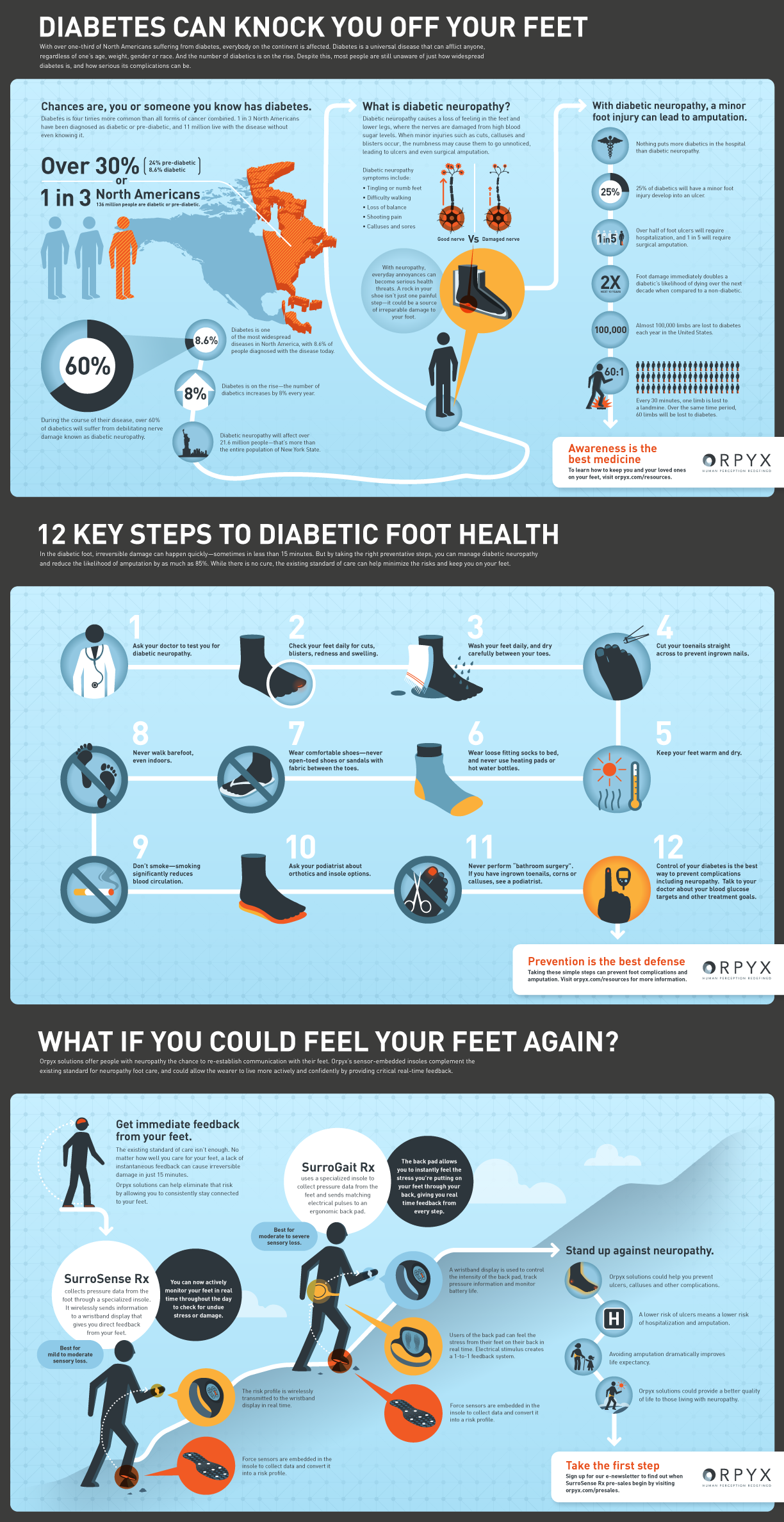
Diabetes Can Knock You off Your Feet

Diabetes can cause problems that can affect your feet.Good foot care can help people with diabetes to avoid foot problems. Take care of your feet, get regular check-ups from your doctor or feel free to contact FootScientific through phone, or email using the details found on this page. 

Address: 165 West Canyon Crest Road, Alpine, UT 84004

Phone: (801) 642-2084

Email: store@footscientific.com

Site: http://www.footscientific.com/

Twitter: https://twitter.com/FootScientific?

Facebook: http://www.facebook.com/FootScientific

Youtube: 

Source

Diabetes Can Knock You off Your Feet


Diabetes can cause problems that can affect your feet.Good foot care can help people with diabetes to avoid foot problems. Take care of your feet, get regular check-ups from your doctor or feel free to contact FootScientific through phone, or email using the details found on this page.


Address: 165 West Canyon Crest Road, Alpine, UT 84004
Phone: (801) 642-2084
Email: store@footscientific.com
Site: http://www.footscientific.com/
Twitter: https://twitter.com/FootScientific?
Facebook: http://www.facebook.com/FootScientific
Youtube: http://www.youtube.com/user/footscientific?


Source

Monday, 29 October 2012

Plantar Fibroma Information and Treatment - FootScientific


Dr. J. Robert Faux explains Plantar Fibromas and how to live with/treat them.

For more information on other foot conditions, visit www.footscientific.com.

About FootScientific

FootScientific was created by two practicing physicians and a physical therapist to give their patients the most well informed and comprehensive foot and ankle information available on the web. As opposed to isolating their practices and expertise, Dr. J. Robert Faux: Orthopedic Surgeon, Dr. Greg S. Anderson: Podiatrist, and Greg R. Thorpe: Physical Therapist fully integrate their expertise under one website - FOOT SCIENTIFIC. These three field leaders combine over 50 years of experience to help avoid the guess work on best methods, products, and services available for the foot and ankle.

Contact FootScientific:

Address: 165 West Canyon Crest Road, Alpine, UT 84004
Phone: (801) 642-2084
Email: store@footscientific.com
Twitter: https://twitter.com/FootScientific?
Facebook: http://www.facebook.com/FootScientific

Peroneal Tendonitis Information and Treatment - FootScientific


Dr. J. Robert Faux explains Peroneal Tendonitis and how to live with/treat it.

For more information on other foot conditions, visit www.footscientific.com.

About FootScientific

FootScientific was created by two practicing physicians and a physical therapist to give their patients the most well informed and comprehensive foot and ankle information available on the web. As opposed to isolating their practices and expertise, Dr. J. Robert Faux: Orthopedic Surgeon, Dr. Greg S. Anderson: Podiatrist, and Greg R. Thorpe: Physical Therapist fully integrate their expertise under one website - FOOT SCIENTIFIC. These three field leaders combine over 50 years of experience to help avoid the guess work on best methods, products, and services available for the foot and ankle.

Contact FootScientific:


Address: 165 West Canyon Crest Road, Alpine, UT 84004
Phone: (801) 642-2084
Email: store@footscientific.com
Twitter: https://twitter.com/FootScientific?
Facebook: http://www.facebook.com/FootScientific

Midfoot Arthritis Information and Treatment - FootScientific


Dr. J. Robert Faux explains Midfoot Arthritis and how to live with/treat it.

For more information on other foot conditions, visit www.footscientific.com.

About FootScientific

FootScientific was created by two practicing physicians and a physical therapist to give their patients the most well informed and comprehensive foot and ankle information available on the web. As opposed to isolating their practices and expertise, Dr. J. Robert Faux: Orthopedic Surgeon, Dr. Greg S. Anderson: Podiatrist, and Greg R. Thorpe: Physical Therapist fully integrate their expertise under one website - FOOT SCIENTIFIC. These three field leaders combine over 50 years of experience to help avoid the guess work on best methods, products, and services available for the foot and ankle.

Contact FootScientific:

Address: 165 West Canyon Crest Road, Alpine, UT 84004
Phone: (801) 642-2084
Email: store@footscientific.com
Twitter: https://twitter.com/FootScientific?
Facebook: http://www.facebook.com/FootScientific

Metatarsalgia Information and Treatment - FootScientific


Dr. J. Robert Faux explains Metatarsalgia (pain in the forefoot) and how to live with/treat it.

For more information on other foot conditions, visit www.footscientific.com.

About FootScientific

FootScientific was created by two practicing physicians and a physical therapist to give their patients the most well informed and comprehensive foot and ankle information available on the web. As opposed to isolating their practices and expertise, Dr. J. Robert Faux: Orthopedic Surgeon, Dr. Greg S. Anderson: Podiatrist, and Greg R. Thorpe: Physical Therapist fully integrate their expertise under one website - FOOT SCIENTIFIC. These three field leaders combine over 50 years of experience to help avoid the guess work on best methods, products, and services available for the foot and ankle.

Contact FootScientific:

Address: 165 West Canyon Crest Road, Alpine, UT 84004
Phone: (801) 642-2084
Email: store@footscientific.com
Twitter: https://twitter.com/FootScientific?
Facebook: http://www.facebook.com/FootScientific

Mallet Toe Information and Treatment - FootScientific


Dr. J. Robert Faux explains Mallet Toes and how to live with/treat them.

For more information on other foot conditions, visit www.footscientific.com.

About FootScientific

FootScientific was created by two practicing physicians and a physical therapist to give their patients the most well informed and comprehensive foot and ankle information available on the web. As opposed to isolating their practices and expertise, Dr. J. Robert Faux: Orthopedic Surgeon, Dr. Greg S. Anderson: Podiatrist, and Greg R. Thorpe: Physical Therapist fully integrate their expertise under one website - FOOT SCIENTIFIC. These three field leaders combine over 50 years of experience to help avoid the guess work on best methods, products, and services available for the foot and ankle.

Contact FootScientific:

Address: 165 West Canyon Crest Road, Alpine, UT 84004
Phone: (801) 642-2084
Email: store@footscientific.com
Twitter: https://twitter.com/FootScientific?
Facebook: http://www.facebook.com/FootScientific

Hammer Toe Information and Treatment - FootScientific


Dr. J. Robert Faux explains Hammer Toes and how to live with/treat them.

For more information on other foot conditions, visit www.footscientific.com.

About FootScientific

FootScientific was created by two practicing physicians and a physical therapist to give their patients the most well informed and comprehensive foot and ankle information available on the web. As opposed to isolating their practices and expertise, Dr. J. Robert Faux: Orthopedic Surgeon, Dr. Greg S. Anderson: Podiatrist, and Greg R. Thorpe: Physical Therapist fully integrate their expertise under one website - FOOT SCIENTIFIC. These three field leaders combine over 50 years of experience to help avoid the guess work on best methods, products, and services available for the foot and ankle.

Contact FootScientific:

Address: 165 West Canyon Crest Road, Alpine, UT 84004
Phone: (801) 642-2084
Email: store@footscientific.com
Twitter: https://twitter.com/FootScientific?
Facebook: http://www.facebook.com/FootScientific

Hallux Limitus Information and Treatment - FootScientific


Dr. J. Robert Faux explains Hallux Limitus/Hallux Rigidus and how to treat it.

For more information on other foot conditions, visit www.footscientific.com.

About FootScientific

FootScientific was created by two practicing physicians and a physical therapist to give their patients the most well informed and comprehensive foot and ankle information available on the web. As opposed to isolating their practices and expertise, Dr. J. Robert Faux: Orthopedic Surgeon, Dr. Greg S. Anderson: Podiatrist, and Greg R. Thorpe: Physical Therapist fully integrate their expertise under one website - FOOT SCIENTIFIC. These three field leaders combine over 50 years of experience to help avoid the guess work on best methods, products, and services available for the foot and ankle.

Contact FootScientific:

Address: 165 West Canyon Crest Road, Alpine, UT 84004
Phone: (801) 642-2084
Email: store@footscientific.com
Twitter: https://twitter.com/FootScientific?
Facebook: http://www.facebook.com/FootScientific

Haglund's Deformity Information and Treatment - FootScientific


Dr. J. Robert Faux explains Haglund’s Deformity, a bony enlargement on the back of the heel, as well as how to treat it.

For more information on other foot conditions, visit www.footscientific.com.

About FootScientific

FootScientific was created by two practicing physicians and a physical therapist to give their patients the most well informed and comprehensive foot and ankle information available on the web. As opposed to isolating their practices and expertise, Dr. J. Robert Faux: Orthopedic Surgeon, Dr. Greg S. Anderson: Podiatrist, and Greg R. Thorpe: Physical Therapist fully integrate their expertise under one website - FOOT SCIENTIFIC. These three field leaders combine over 50 years of experience to help avoid the guess work on best methods, products, and services available for the foot and ankle.

Contact FootScientific:

Address: 165 West Canyon Crest Road, Alpine, UT 84004
Phone: (801) 642-2084
Email: store@footscientific.com
Twitter: https://twitter.com/FootScientific?
Facebook: http://www.facebook.com/FootScientific

Drop Foot Information and Treatment - FootScientific


Dr. J. Robert Faux explains Drop Foot and how to live with/treat it. Visithttp://www.youtube.com/watch?v=QjzEcBeC_fk to learn about the Elevate Drop Foot brace that Dr. Faux and FootMind, Inc. have created.

For more information on other foot conditions, visit www.footscientific.com.

About FootScientific

FootScientific was created by two practicing physicians and a physical therapist to give their patients the most well informed and comprehensive foot and ankle information available on the web. As opposed to isolating their practices and expertise, Dr. J. Robert Faux: Orthopedic Surgeon, Dr. Greg S. Anderson: Podiatrist, and Greg R. Thorpe: Physical Therapist fully integrate their expertise under one website - FOOT SCIENTIFIC. These three field leaders combine over 50 years of experience to help avoid the guess work on best methods, products, and services available for the foot and ankle.

Contact FootScientific:

Address: 165 West Canyon Crest Road, Alpine, UT 84004
Phone: (801) 642-2084
Email: store@footscientific.com
Twitter: https://twitter.com/FootScientific?
Facebook: http://www.facebook.com/FootScientific

Cracked Skin on the Feet Information and Treatment - FootScientific


Dr. J. Robert Faux explains cracked skin that occurs on the feet as well as how to treat it.

For more information on other foot conditions, visit www.footscientific.com.

About FootScientific

FootScientific was created by two practicing physicians and a physical therapist to give their patients the most well informed and comprehensive foot and ankle information available on the web. As opposed to isolating their practices and expertise, Dr. J. Robert Faux: Orthopedic Surgeon, Dr. Greg S. Anderson: Podiatrist, and Greg R. Thorpe: Physical Therapist fully integrate their expertise under one website - FOOT SCIENTIFIC. These three field leaders combine over 50 years of experience to help avoid the guess work on best methods, products, and services available for the foot and ankle.

Contact FootScientific:

Address: 165 West Canyon Crest Road, Alpine, UT 84004
Phone: (801) 642-2084
Email: store@footscientific.com
Twitter: https://twitter.com/FootScientific?
Facebook: http://www.facebook.com/FootScientific

Corns and Calluses Information and Treatment - FootScientific


Dr. J. Robert Faux explains corns and calluses that form on the feet as well as how to treat them.

For more information on other foot conditions, visit www.footscientific.com.


About FootScientific

FootScientific was created by two practicing physicians and a physical therapist to give their patients the most well informed and comprehensive foot and ankle information available on the web. As opposed to isolating their practices and expertise, Dr. J. Robert Faux: Orthopedic Surgeon, Dr. Greg S. Anderson: Podiatrist, and Greg R. Thorpe: Physical Therapist fully integrate their expertise under one website - FOOT SCIENTIFIC. These three field leaders combine over 50 years of experience to help avoid the guess work on best methods, products, and services available for the foot and ankle.

Contact FootScientific:

Address: 165 West Canyon Crest Road, Alpine, UT 84004
Phone: (801) 642-2084
Email: store@footscientific.com
Twitter: https://twitter.com/FootScientific?
Facebook: http://www.facebook.com/FootScientific


Elevate Drop Foot Brace - FootScientific


Dr. Rob Faux, an orthopedic foot and ankle surgeon, talks about a drop foot brace he helped FootMind, Inc. design called Elevate.


About FootScientific

FootScientific was created by two practicing physicians and a physical therapist to give their patients the most well informed and comprehensive foot and ankle information available on the web. As opposed to isolating their practices and expertise, Dr. J. Robert Faux: Orthopedic Surgeon, Dr. Greg S. Anderson: Podiatrist, and Greg R. Thorpe: Physical Therapist fully integrate their expertise under one website - FOOT SCIENTIFIC. These three field leaders combine over 50 years of experience to help avoid the guess work on best methods, products, and services available for the foot and ankle.

Contact FootScientific:

Address: 165 West Canyon Crest Road, Alpine, UT 84004
Phone: (801) 642-2084
Email: store@footscientific.com
Site: http://www.footscientific.com/
Twitter: https://twitter.com/FootScientific?
Facebook: http://www.facebook.com/FootScientific


Thursday, 25 October 2012

The Truth Behind Diabetes

symptoms of drop foot,ankle arthritis, ball of foot pain, Diabetic Foot, Pronation, High Arches
FootScientific


Early discovery of diabetes increases the chances of maintaining a productive and healthy life even with the disease.

Source

Peripheral Neuropathy

symptoms of drop foot,ankle arthritis, ball of foot pain, Diabetic Foot, Pronation, High Arches
FootScientific


Peripheral neuropathy usually starts with numbness, painful or itchy in the toes or fingers.

Source


The Truth Behind Diabetes

symptoms of drop foot,ankle arthritis, ball of foot pain, Diabetic Foot, Pronation, High Arches FootScientific


Early discovery of diabetes increases the chances of maintaining a productive and healthy life even with the disease.

Resources : http://www.socks4life.com/resources/wp-content/uploads/2011/09/Diabetes_Info_Graphic.jpg